The Great Export: How China’s Game Studios Are Rewriting the Rules of Global Publishing
Aug 13 2026・6 mins
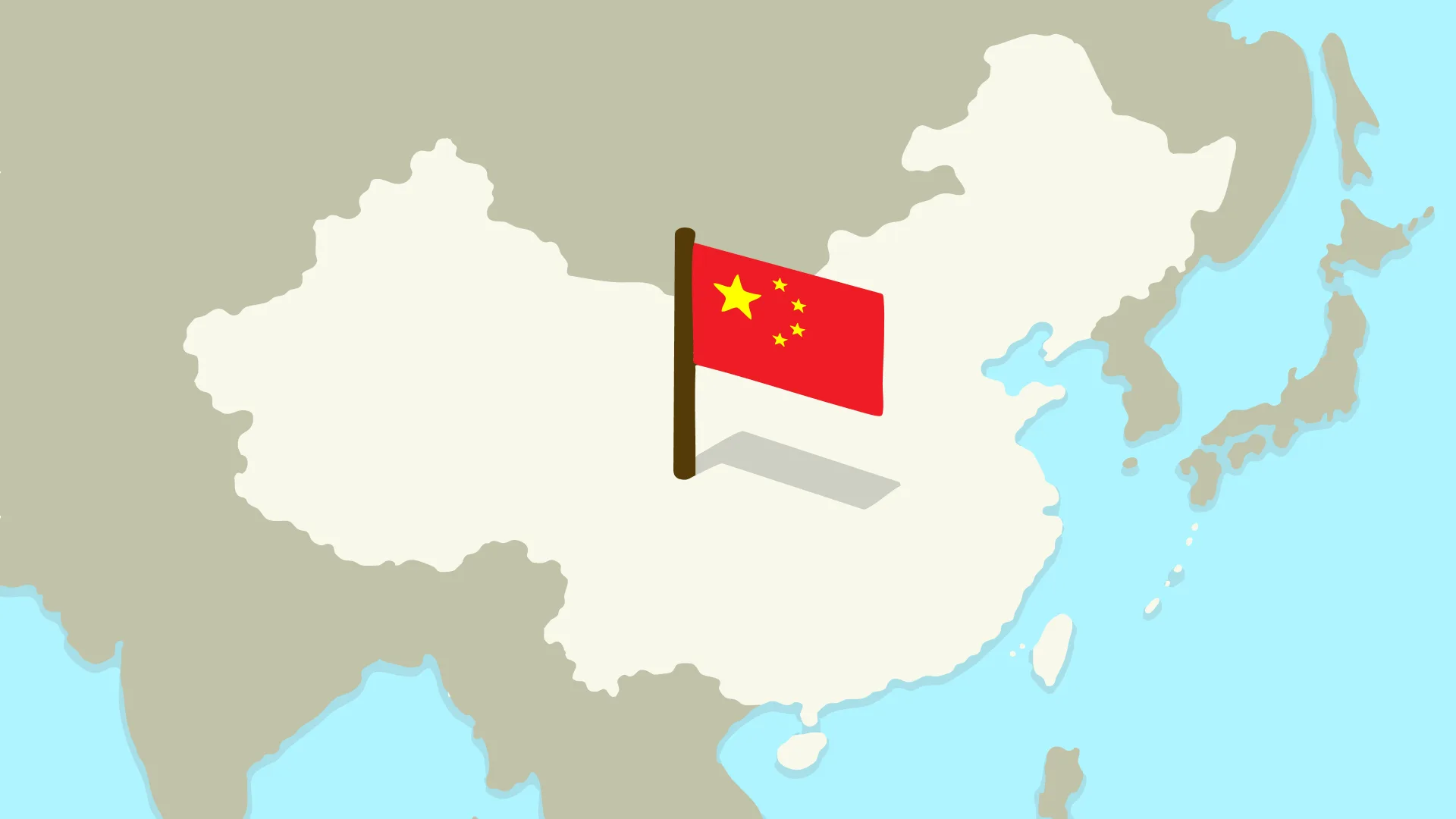
China’s game studios are done playing at home.
For decades, global gaming ran on one-way traffic. Western publishers localized their titles and pushed into China, the world’s biggest gaming market, navigating regulatory hurdles along the way. That dynamic has reversed. China isn’t just the biggest consumer market anymore. It’s the biggest exporter of gaming IP.
Genshin Impact and Honor of Kings are some of the titles holding player attention and driving the cultural conversation, and these aren’t coming out of California. They’re built in Shanghai, Shenzhen, and Beijing. By February 2026, Chinese-owned titles held seven of the top 15 global grossing mobile slots, generating a combined $668 million in in-app purchase revenue in a single month Western studios, meanwhile, are leaning on legacy titles. Not one new 2025 launch cracked the top 15 by revenue in Tier-1 Western markets from a Western studio.
Chinese games earned $20.5 billion in overseas markets in 2025, a tenth consecutive year of growth, and the second consecutive year of double-digit expansion. Chinese publishers aren’t localizing domestic hits as an afterthought anymore. They’re building for global players from day one.
Chinese studios are dominating on revenue, not just headcount. Per Coda’s internal analysis of the Southeast Asian mobile games market, Chinese-published titles account for 8 of the top 15 grossing mobile games in the region, representing nearly half of the category revenue.
The Fragmented Reality of Global Payments
Building a globally beloved game is an artistic and technical triumph. Monetizing it globally is where the real complexity starts.
In China, the digital payment ecosystem is remarkably unified. A publisher can cover virtually the entire market with just two giants: WeChat Pay and Alipay. It’s a streamlined, friction-free environment. But when a Beijing-based studio launches a game in Jakarta, São Paulo, or Lagos, that simplicity vanishes.
A player in Southeast Asia or Latin America doesn’t pay the way a player in San Francisco or Beijing does. Credit card penetration remains low in emerging markets, which are, ironically, some of the fastest-growing gaming regions in the world. Credit cards are used by a mere 13% of mobile gamers in Southeast Asia, and only 4.9% of gamers in East Asian markets like Japan and Korea use debit cards. Understanding emerging payment dynamics across APAC markets becomes critical to capturing this demand.
Instead, players rely on a fragmented patchwork of local payment methods (APMs):
- E-wallets like Dana and OVO in Indonesia, or GCash in the Philippines, dominate consumer preference, 55.1% of Southeast Asian mobile gamers choose digital wallets as their primary payment method.
- Real-time bank transfers and cash-based solutions.
- Direct carrier billing, preferred by 24.8% of gamers in Southeast Asia.
Getting your game onto a player’s phone via global app stores is one challenge. But actually getting paid by them, offering the exact local checkout experience they expect and trust, is where most global expansion strategies quietly break down.
The 30% Tax and the Shift Out-of-App
Compounding this payment fragmentation is the shifting landscape of app store economics. Historically, publishers accepted the standard 30% platform fee as the cost of global distribution.
But in a market that demands efficiency, those terms are increasingly difficult to absorb. Every percentage point lost to platform fees is margin that can’t be reinvested into LiveOps, localized marketing, or richer game content. Relying exclusively on primary app stores also keeps publishers at arm’s length from their players, masking the first-party data that drives long-term retention.
This is particularly true for Chinese publishers who are aggressively buying their way into Western markets. Chinese publishers now account for an astonishing 35% of all global mobile user acquisition (UA) spend, representing a 22% increase year-on-year. With UA costs soaring, clawing back margin from platform fees has become a survival metric.
As we’ve seen through recent regulatory shifts worldwide, from Epic’s landmark settlements to Google’s restructured Play Store fees, the industry is undergoing a great recalibration. Out-of-app monetization is no longer a theoretical alternative. It’s a core commercial strategy. Out-of-app platforms now account for an estimated 38.5% of mobile game downloads and 26% of total revenue across the broader Asian mobile gaming ecosystem. In Southeast Asia alone, out-of-app payments now account for 38% of total mobile game market revenue, up from 21% two years ago. By 2028, out-of-app monetization is projected to account for a third of all mobile gaming revenue across Asia.
By building direct-to-consumer (D2C) webstores, Chinese publishers can bypass heavy platform commissions, offer localized alternative payments, and build a direct line to their global player communities.
The Infrastructure Layer Nobody Sees
This is where Coda operates. Publishers focus on building worlds players want to live in. Coda builds what makes those worlds commercially viable once they leave the domestic market. With deep partnerships across China’s leading publishers and a dedicated commercial team embedded in-market, Coda bridges Chinese gaming IP with the hyper-local payment behaviors of 80+ markets worldwide.

Instead of publishers building and securing payment integrations country by country, Coda’s end-to-end D2C solution handles it as one system:
Merchant of Record services that manage taxes, compliance, chargebacks, and fraud, so publishers scale without setting up local legal entities in every market.
- Branded web stores that launch in minutes and pull app store assets automatically.
- A network connecting games to over 400 local payment methods.
- Native-feeling deep links that carry players from app to web checkout without losing them.
- Merchant of Record services that manage taxes, compliance, chargebacks, and fraud, so publishers scale without setting up local legal entities in every market.
AI Builds the Experience. Payments Build the Revenue.
At ChinaJoy 2026, the industry’s attention is on technological breakthroughs. Discussions around AI-assisted game development, automated localization, and procedural world-building dominate the stages.
Chinese studios are famously leading this charge. Over 80% of Chinese developers are already using generative AI across their art, coding, operations, and UA pipelines, enabling teams of just three people to churn out minimum viable products in as little as two weeks or even assisting teams in deploying AI-powered webstores for apps and games.
But the publishers who will win the next era of global gaming are not just the ones with the smartest development pipelines. They are the ones who have solved the last mile of global commerce.
AI can write the code and build the experience. But robust, localized payment infrastructure is what builds the revenue.
The Great Export is already well underway, and the rules of global publishing are being rewritten in real-time. For China’s ambitious studios, the open question is no longer global appetite; it is commercial infrastructure.
Let’s build a more connected global gaming space together.
Ready to scale your out-of-app monetization strategy? Talk to us.
Related



© 2026 Coda Payments Pte. Ltd
Site Credits