The Great Recalibration: How Gaming Is Building Its Next Chapter
Words by Joey Dacillo, Communications and Editorial Manager・Apr 20 2026・4 mins

If you’re watching the gaming industry right now, you might be seeing two different stories unfold.
Some studios are trimming portfolios and doubling down on proven franchises, investing in what already has strong player love and predictable returns.
At the same time, capital is still moving. We’re seeing targeted acquisitions, smart bets on underserved markets, and new partnerships designed to build global scale. We’re seeing targeted acquisitions and strategic deals designed to build global scale, from major cross-border negotiations like Savvy Games Group’s near-$6 billion deal for Moonton, to broader M&A activity shaping how game companies expand their reach and portfolios.
Both point to the same shift.
A Shift Towards Disciplined Growth
What we’re seeing is a recalibration. After years of hyper-growth driven by pandemic behavior shifts and easy capital, gaming is entering a more mature phase, one where efficiency matters as much as ambition.
The question is no longer just “how do we grow?” It’s “how do we grow smarter?”
That shift is putting the spotlight on:
- Sustainable monetization
- Operational agility
- Deeper, longer-lasting player relationships
Growth You Don’t Fully Own
Building on someone else’s platform has always come with trade-offs. App stores offer distribution, but that access comes at a cost, typically a 30% commission on every transaction, limited visibility into who your players actually are, and little control over the purchase experience itself.
For a long time, those were acceptable terms. Now, they’re harder to absorb. In a market that demands efficiency, the math on platform dependency changes. Every percentage point lost to fees is a margin that doesn’t go toward content, LiveOps, or rewarding your most loyal players. And without direct access to player data, personalization stays surface-level, leaving money and relationships on the table.
The platform isn’t the problem. But relying on it exclusively is.
Why Out-of-App is Becoming a Core Strategy
Out-of-app monetization isn’t just about moving transactions outside the store. It’s about giving publishers more control over how they monetize, how they learn, and how they grow.
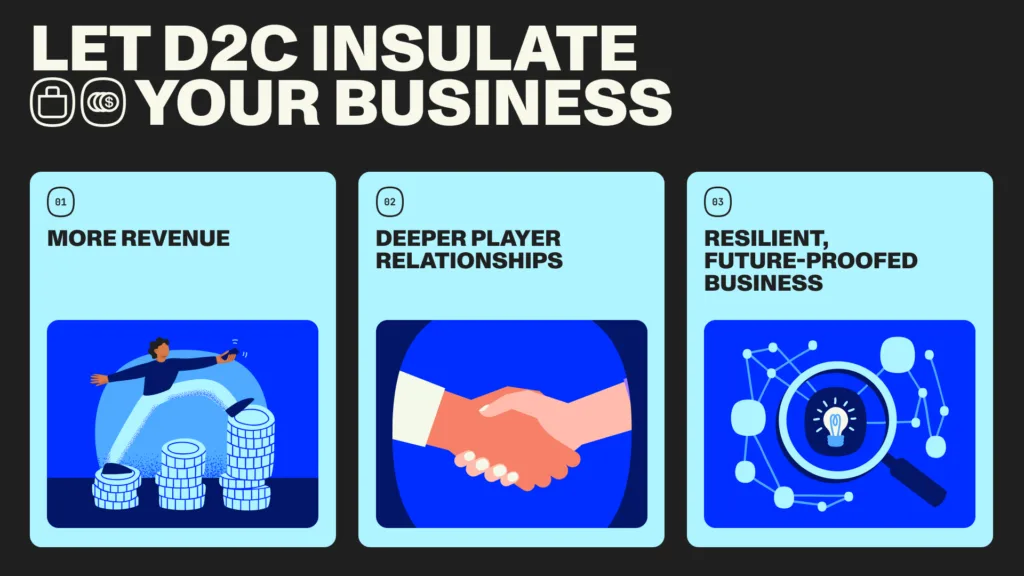
With the right D2C setup, publishers can:
Build a more resilient business: When your monetization strategy depends entirely on third-party rules and algorithms, you inherit their volatility. A direct channel gives you more stability and more freedom to innovate with pricing, bundles, promotions, and community-driven offers.
Keep more of what they earn: Out-of-app purchases can reduce the revenue lost to platform fees, unlocking meaningful margin that can be reinvested into content, LiveOps, and player rewards.
Build stronger player relationships: App stores often limit visibility into who your players are and what they value. A D2C channel helps publishers build a direct relationship with first-party insights that make personalization, segmentation, and retention far more powerful.
How Coda Fits In
With Coda’s end-to-end D2C solution, publishers can:
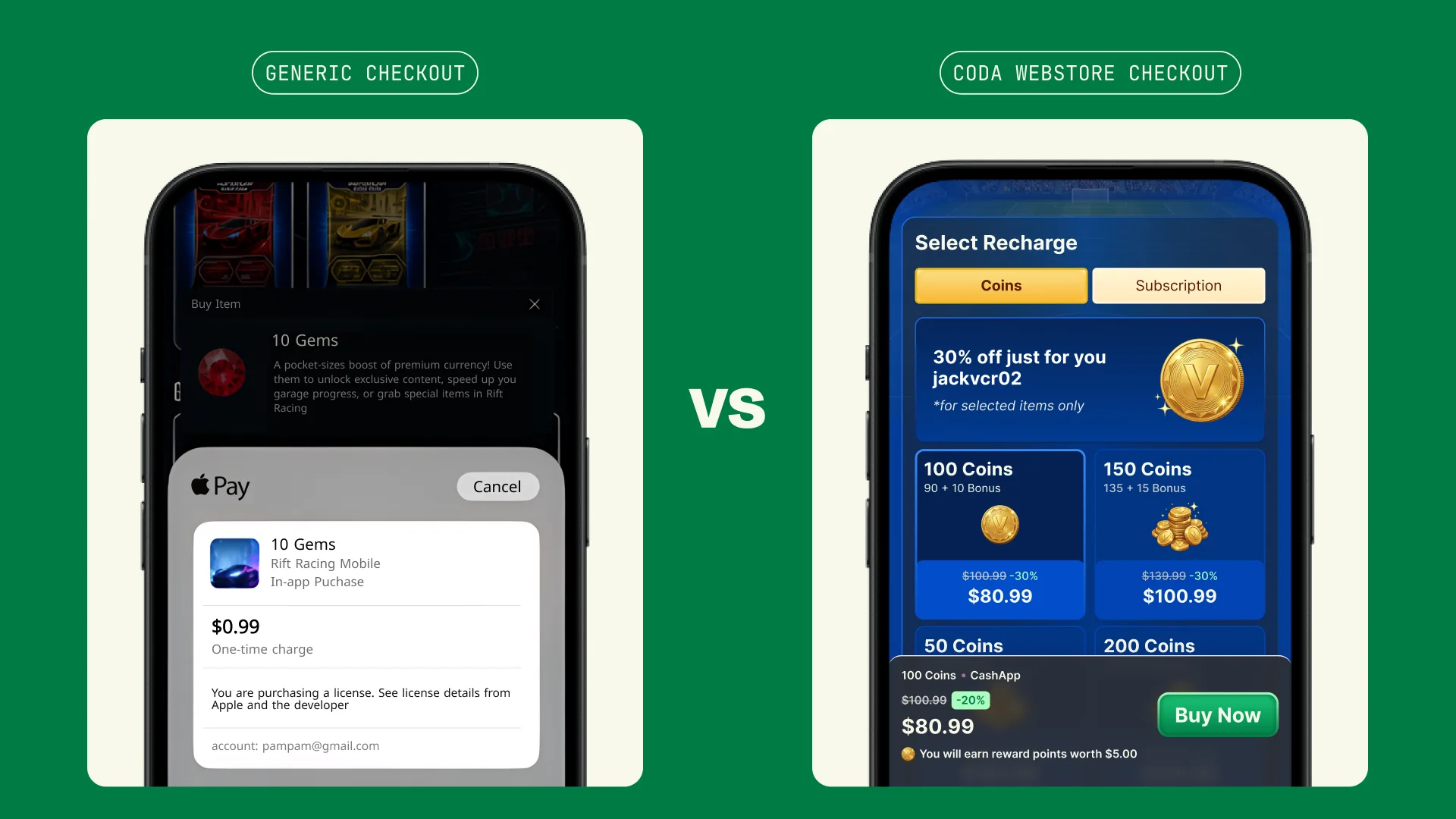
- Launch the right store, fast: Build a fully bespoke web store or go live in minutes with the no-code through Coda Webstore, without the heavy engineering lift.
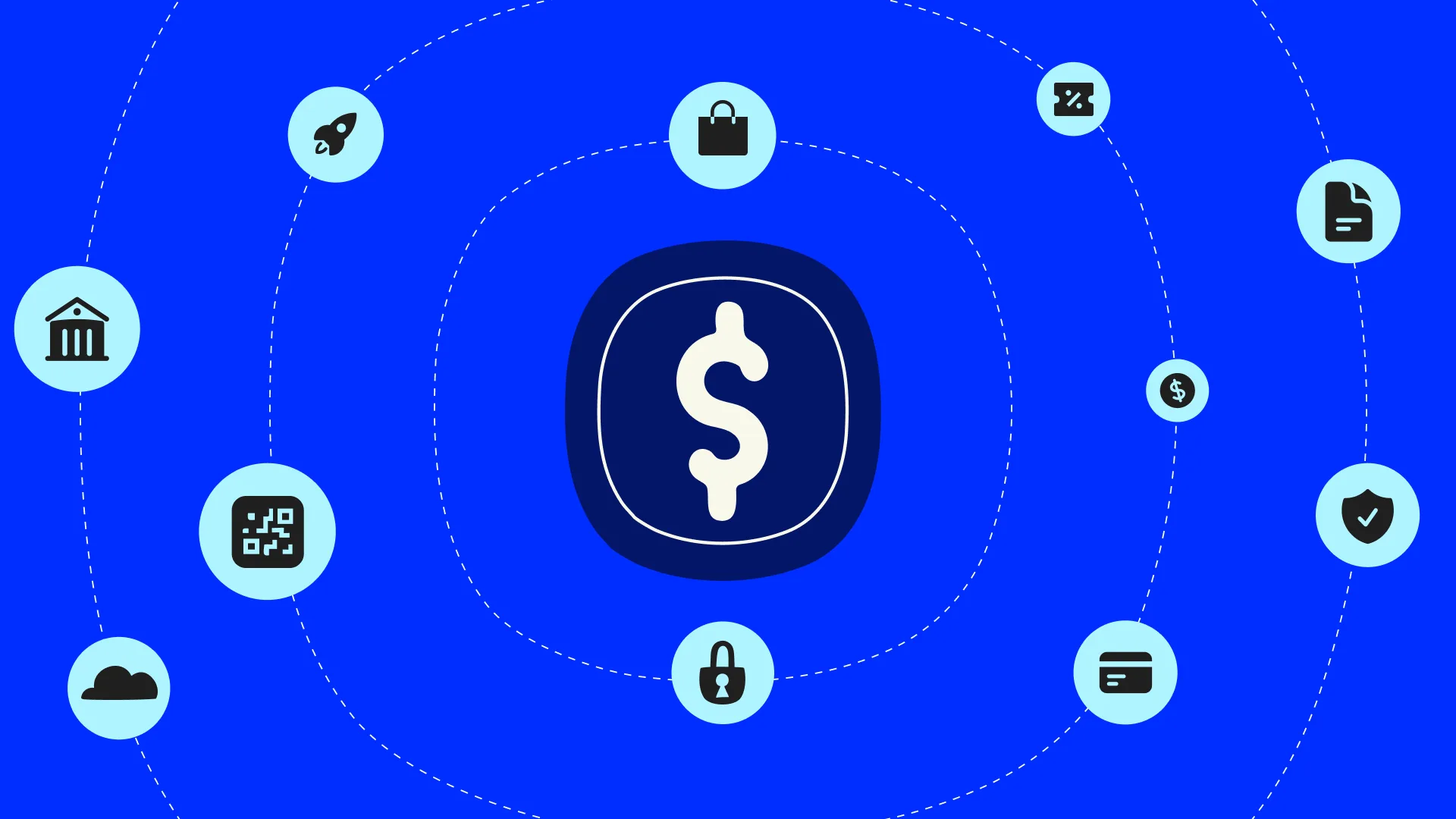
- Monetize globally with confidence: Codapay integrates 400+ payment methods into Coda storefronts or existing web stores, helping capture demand beyond credit cards.
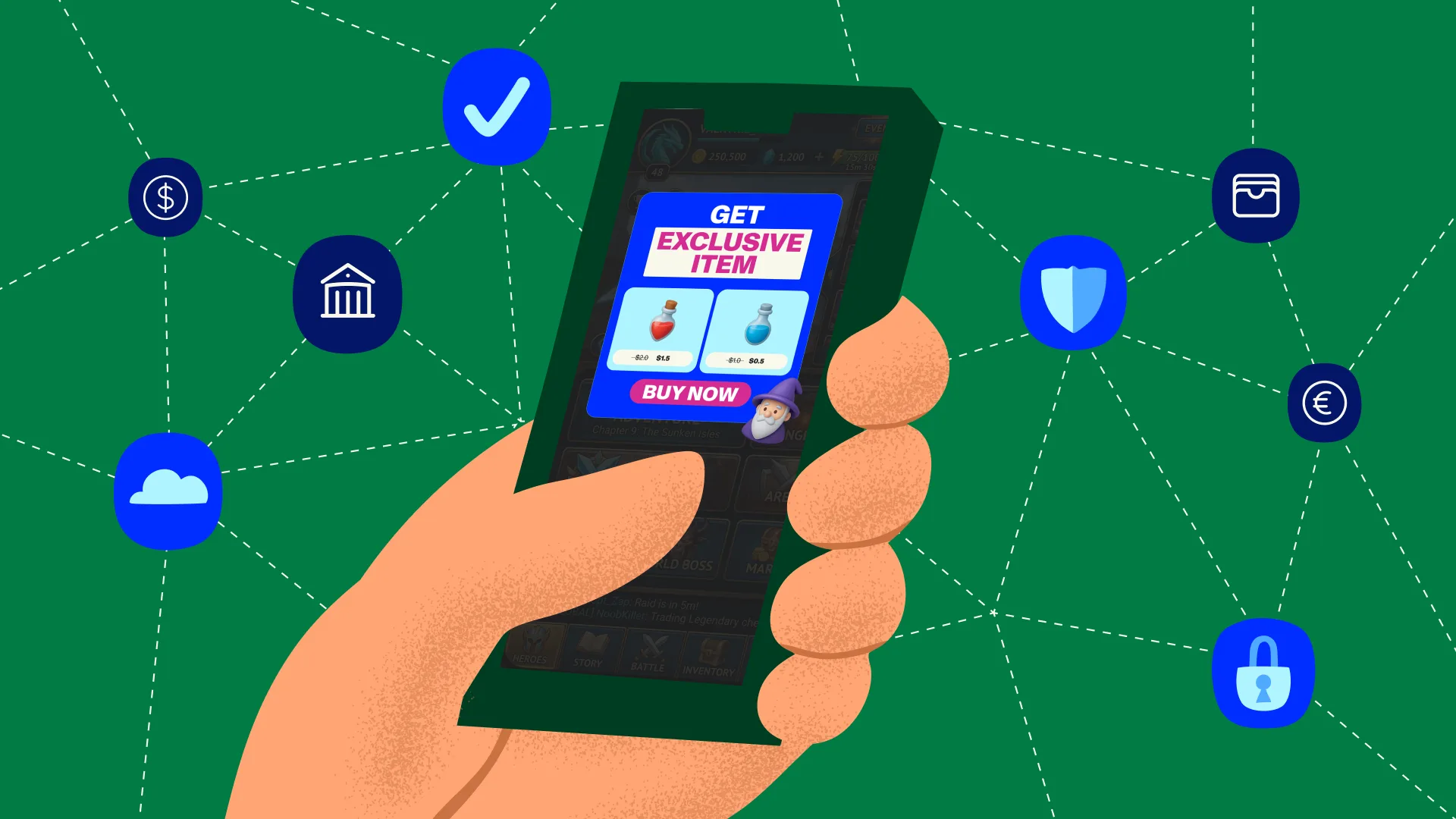
- Connect players seamlessly: Coda Links deep-links players from in-app to web checkout, automatically passing user identity to reduce friction and improve conversion.
- Scale without operational complexity: As regulations evolve across markets, Coda acts as Merchant of Record, managing local taxes, regulatory requirements, fraud, and chargebacks so publishers can scale globally without setting up local entities.
Define the Next Era of Play
The great recalibration in gaming is not about shrinking ambition. It’s about channeling it more intelligently. At Coda, we work towards prioritizing building businesses that are as masterfully designed as the games they create.
This reset, matched with the right solutions, is laying a stronger, more sustainable foundation for the future of gaming. The publishers who embrace this moment to take control of their monetization and deepen their player relationships are the ones who will define the next era of play.
Let’s build it together, talk to us: https://www.coda.co/contact/
Related
© 2026 Coda Payments Pte. Ltd
Site Credits