Out-of-App Payment Platforms for Gaming Publishers: The AAA Studio Playbook
Sep 21 2026・6 mins
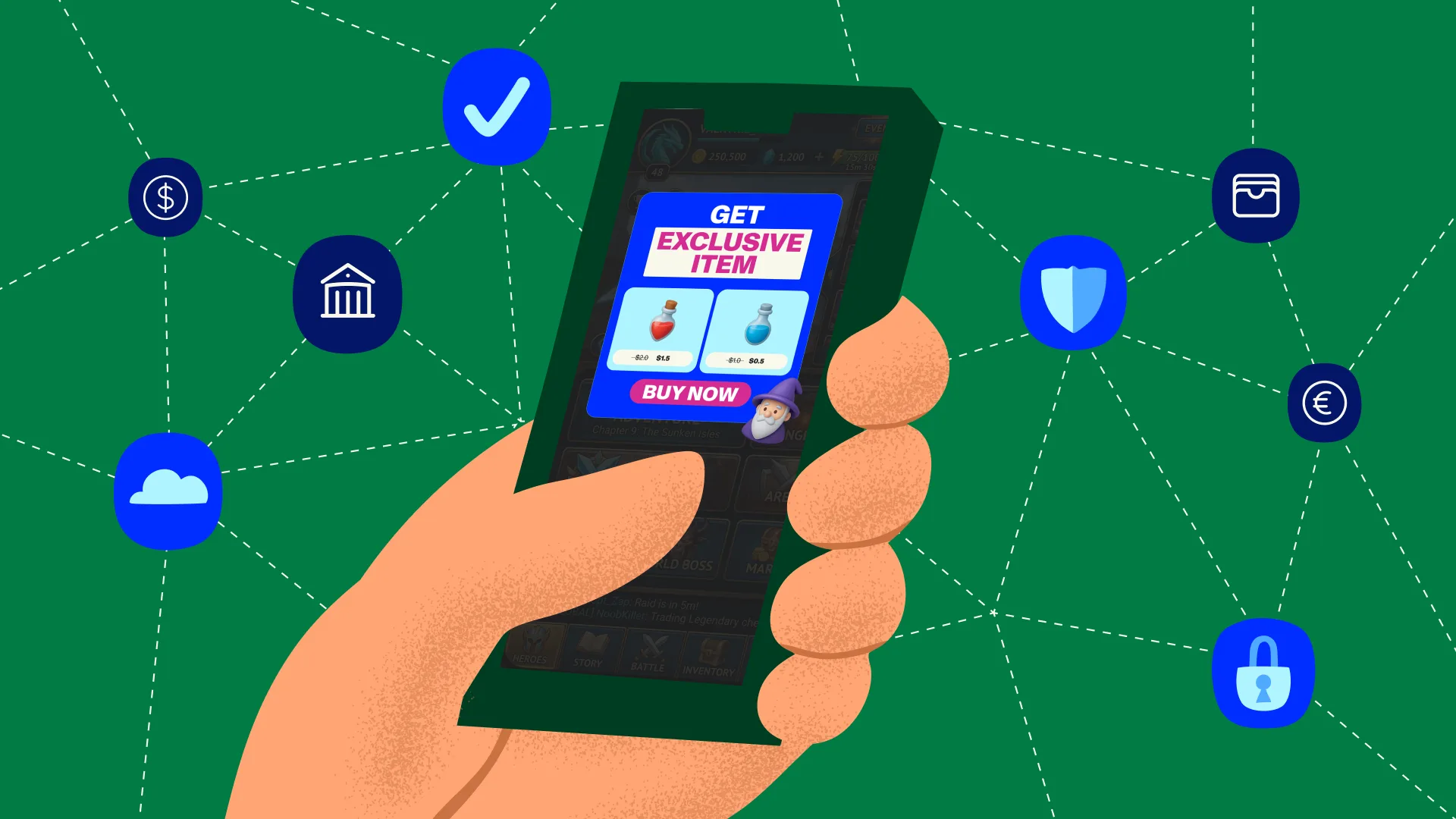
This is Part 1 of a three-part series on vertical-specific out-of-app D2C monetization. In this article, we examine how game publishers and studios can build out-of-app payment journeys that protect conversion, support local payment preferences, and increase player lifetime value.
For game publishers, the value of out-of-app monetization is clear. A direct-to-consumer webstore can reduce dependence on traditional app store billing, where fees can reach 15% to 30%, while giving studios more control over pricing, promotions, and player relationships.
The challenge is building an out-of-app journey that works at gaming scale. Players must move from the game to the web without losing their purchase context. They need access to familiar local payment methods, and purchased digital content must reach the correct account instantly.
TL;DR:
- Coda Links reduces app-to-web friction by carrying Player IDs, SKUs, and server information into the checkout.
- Codapay connects publishers to 400+ payment methods across more than 80 markets through one API.
- Coda Webstore combines branded storefronts with LiveOps, personalized offers, and loyalty mechanics.
- Coda’s Merchant of Record gives studios flexible ways to expand and manage global payment operations.
The Gaming Monetization Bottleneck
For mobile and AAA game publishers, platform fees directly affect how much revenue can be reinvested. As transaction volume increases, losing up to 30% of each in-app purchase can place significant pressure on margins.
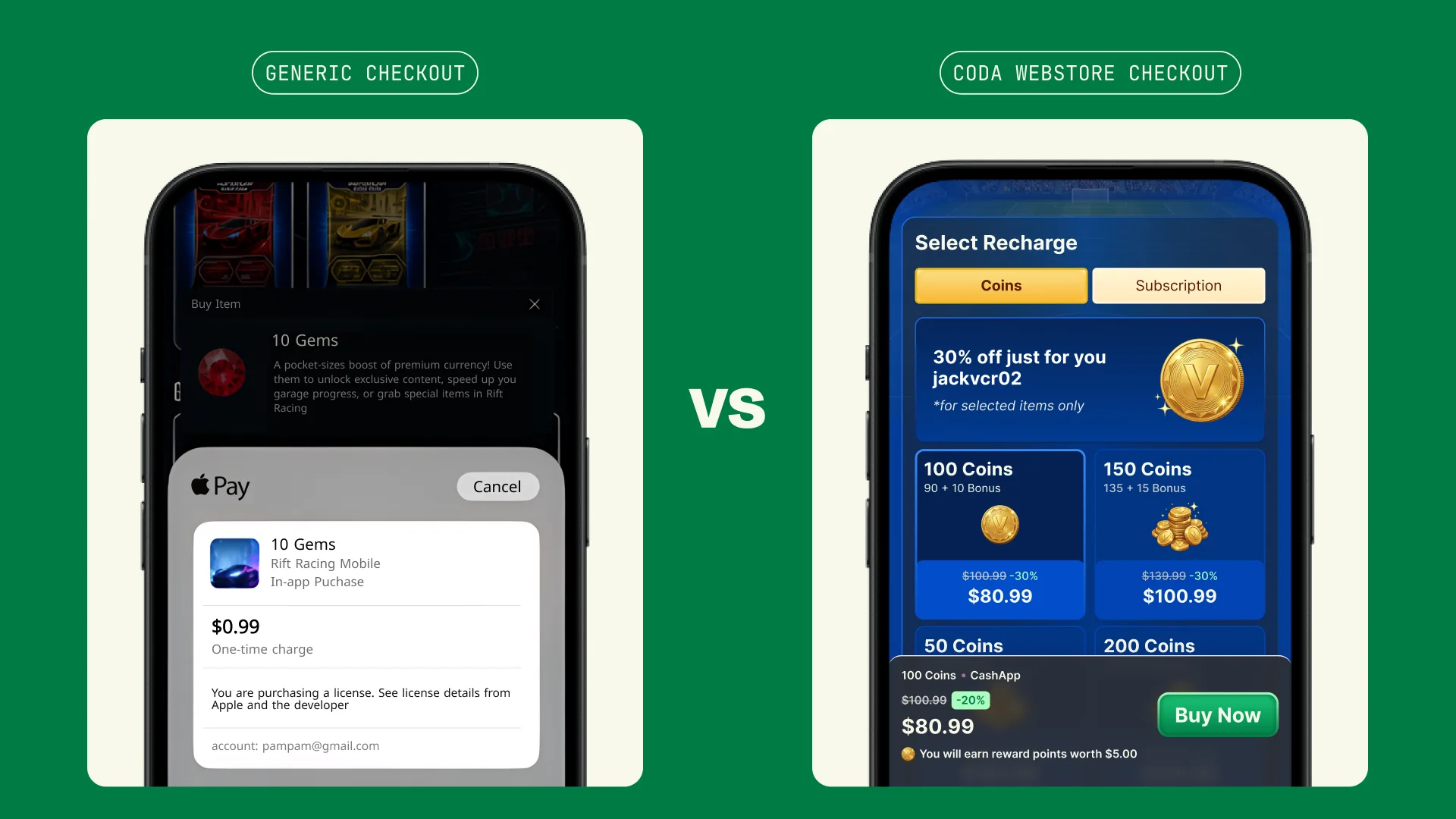
Moving transactions to a webstore creates another route to revenue, but a basic card checkout is not sufficient. Gaming audiences are global, while payment behaviour remains highly local.
Players across Southeast Asia, Latin America, the Middle East, and other emerging markets may rely more heavily on e-wallets, bank transfers, local cards, or direct carrier billing. A webstore that can accept only international credit cards will lose high-intent customers at the final state of the payment journey.
The D2C opportunity therefore extends beyond reducing fees but providing publishers an owned channel where they can localize payment experiences, test LiveOps and loyalty programs, and build direct commercial relationships.
Why Coda?
Coda has served more than 300 publishers and supports gaming leaders including Activision, Electronic Arts, Riot Games, and Moonton.
For large publishers, scale is not simply a question of processing more transactions. A global D2C strategy must connect the game, webstore payment infrastructure, tax framework, and regional operations.
Trying to assemble these components through separate vendors can create inconsistencies and complexities. From integrating link-out technology, regional payment coverage, webstore operations, and merchant compliance – building it within the same out-of-app infrastructure provides greater consistency across the player journey.
Eliminate Redirection Friction with Smarter Deep-Linking
Players often enter a checkout at the moment of highest intent – if they get redirected to a generic webstore and asked to log in again, search for the item, or manually enter a player ID, that intent can disappear quickly.
Coda Links uses smart deep-linking to preserve the technical context of the in-game interaction. The link passes information like Player ID, SKU, server region, and purchase context into the external checkout. This reduces manual steps and helps the publisher attribute and fulfil the order correctly.
Link-out rules still differ by market and platform. Apple, Google, and regulatory frameworks such as the EU Digital Market Act apply different requirements around external purchase links. The requirements continue to evolve, so publishers need market-specific routing rather than one universal link-out flow.
Convert Global Players With Regional Payment Infrastructure
Now, a frictionless redirect only creates value if players complete the payment.
Codapay turns that redirect into a completed payment journey by giving publishers access to more than 400 local and global payment methods across 80+ markets through a single API. This includes payment options in mobile-first audiences such as GCash in the Philippines, GoPay in Indonesia, and Pix in Brazil. Studios can display relevant methods based on the customer’s location and payment preferences.
These elements create a checkout that feels familiar to the player and increases the likelihood that purchase intent becomes completed revenue.
Increase Player LTV With Webstore LiveOps
A D2C webstore should not function as a static catalog. It should give players reason to visit, purchase, and return.
Coda Webstore allows publishers to build a branded commerce destination with custom VIP tiers, loyalty programs, daily rewards, and more. More importantly, SKU, LiveOps, and analytics management can be easily accessed through a single Coda Portal. That way, studios can align offers with seasonal events and new content releases, without wanting for a new game build.
By combining direct links, relevant payment methods, and a branded webstore, publishers can turn high-intent in-game moments into repeat D2C engagement.
Scale Globally With the Right Merchant Model
Selling directly across multiple markets creates new responsibilities. Studios may need to calculate and remit taxes, manage fraud and chargebacks, optimize foreign exchange, and comply with local payment regulations. Under Coda’s Merchant of Record, Coda becomes the legal seller for the transaction and assumes the defined finance and regulatory responsibilities.
For enterprise publishers with their own local entities and Merchant of Record structure, Coda can instead provide payment orchestration. This allows the publisher to remain the legal seller while using Coda to route and optimize payments across its chosen providers and markets.
Build Gaming D2C Around the Player
Successful out-of-app monetization requires more than moving a transaction to the web. It requires continuity between the game, offer, checkout, payment method, and fulfillment experience. Coda connects these elements through its full product suite. Creating a smoother path from in-game intent to complete payment while building an owned channel that supports long-term player value.
Keen on building your out-of-app strategy with Coda? Sign up here.
Frequently Asked Questions (FAQs)
Out-of-app platforms use smart deep links, such as Coda Links, to take players from an in-app promotion to a web checkout. Player and product details pass securely, reducing friction. Once payment is completed, validation APis confirm the purchase so the item can be delivered to the player’s account.
© 2026 Coda Payments Pte. Ltd
Site Credits