


What Is an AI Webshop Builder and How Is It Changing Digital Content E-Commerce?
Jul 02 2026
5 mins
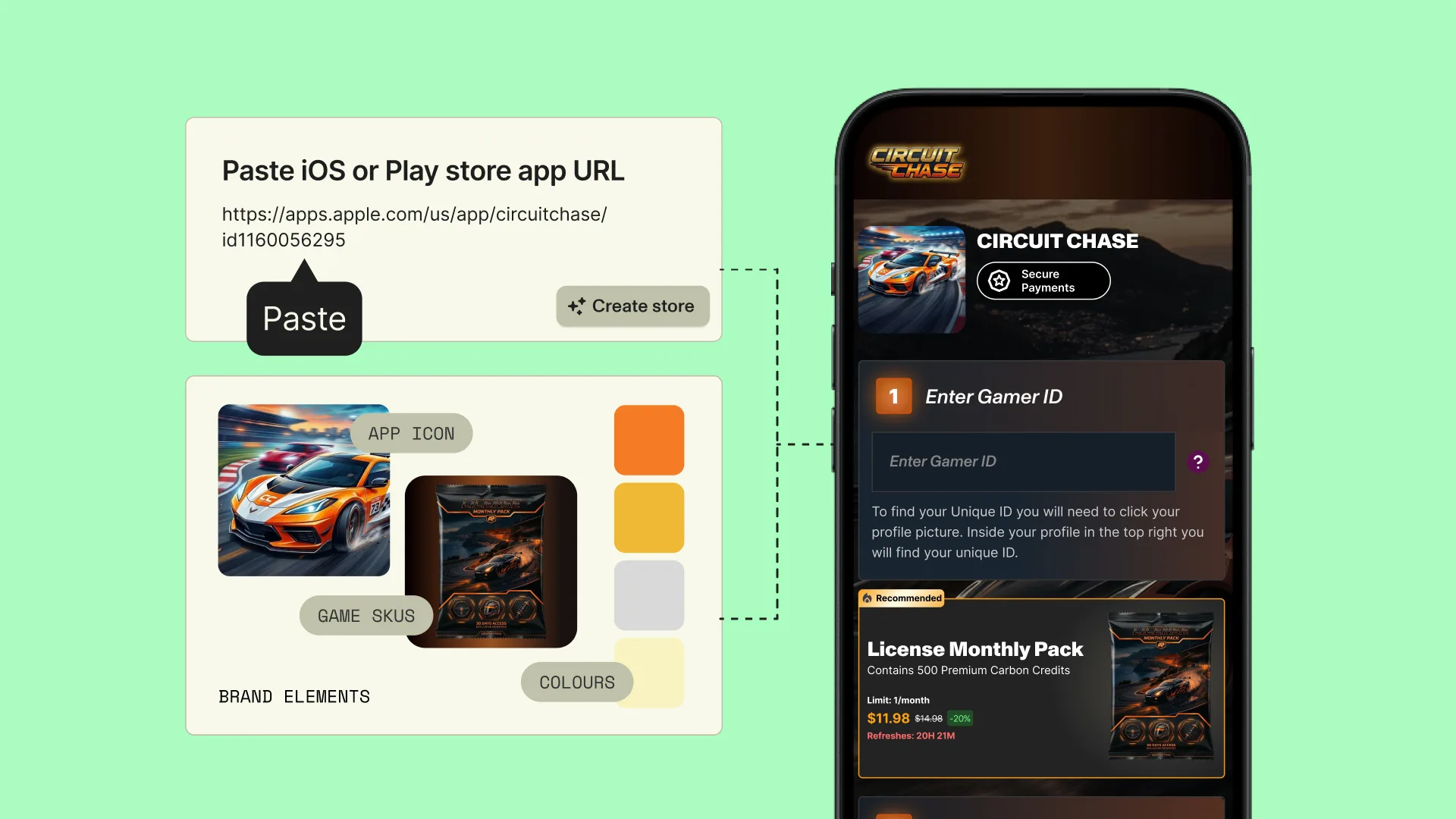
TL;DR: An AI storefront builder uses automation and autonomous agents to generate a functional storefront from existing app or game data, unlike a traditional ecommerce website builder that requires dragging, dropping, and configuring every component. For digital content e-commerce, that can mean moving from an App Store, Steam Store, or Google Play Store link to a localized, conversion-ready webstore in minutes.
What is an AI Webshop Builder?
For app developers, game publishers, and digital content businesses, launching a direct-to-consumer (D2C) webstore has never been more important, and easier.
An AI storefront builder is an automated engine that creates an ecommerce webstore using artificial intelligence, structured data, and autonomous workflows. Instead of starting with a blank template, the autonomous agents collect, structure, design, and localize the key components of a D2C webstore.
For digital content businesses, this means the platform can move from raw data to a functional online webstore without the manual backend building or drag-and-drop page design.
An AI-powered webstore workflow typically includes:
- Data ingestion: Autonomous agents scan and source directories or product feeds to extract core product details, app descriptions, icons, branding metadata, and available digital goods.
- Catalog structuring: The AI engine organizes products into a digital commerce catalog, grouping items into storefront-ready collections.
- Visual automation: The system generates or optimizes visuals including product cards, banners, or promotional modules without manually designing every page element.
- Localization: Translation agents adapt the page content for different markets, helping businesses launch localized web shops faster.
In other words, an AI ecommerce website builder changes the workflow entirely, from manual site creation to automated storefront generation.
The Execution Bottleneck in D2C Commerce
Many app and game publishers understand the value of launching a D2C webstore. It can help reduce traditional platform dependency through out-of-app game monetization, create a direct purchasing channel, and give publishers more control over pricing, promotions, and customer relationships.
The challenge is execution.
Building a digital goods webstore manually often requires multiple steps and teams. Developers handle backend setup and product logic. Designers create storefront pages and promotional assets. Localization teams translate copy for global audiences. Operations teams prepare pricing, catalog structures, and launch workflows.
Even with a generic shop builder, much of this work still has to be done manually and is no longer performing the way it should.
Why Traditional E-commerce Templates Fail Digital Products
Traditional ecommerce templates are usually built for physical retail workflows: SKU logistics, inventory tracking, variants, and fulfillment operations. That structure, unfortunately, does not map cleanly to digital content such as gaming or subscriptions, where businesses need instant digital delivery hooks, dynamic in-app catalog syncing, localized checkout, and multi-market tax remittance.
For digital content publishers, these complexities often require specialized infrastructure that includes Merchant of Record (MoR) built-in, rather than a legacy webstore builder designed for physical goods.
Evaluating AI Shop Builders
The strongest AI shop builders do more than create storefront layouts. They also need to support the payment infrastructure, fraud management, tax handling, and MoR capabilities.
Without this backend, an AI-generated storefront faces the same operational burden that is connecting transactions, managing compliance, and scaling across markets. It may look ready but evidently lacks the foundation to grow seamlessly.
How Coda Builds A Webstore in Minutes
Coda Webstore shows how this works in practice. With just an app store link, Coda uses AI-powered automation that can:
- Scrape app store data, including descriptions, screenshots, branding, and metadata.
- Generate a conversion-optimized storefront tailored for digital goods.
- Create and optimize visual assets for promotions and product displays.
- Localize the storefront with 400+ local and global payment methods, compliance handling, and regional pricing across 80 markets.
By combining all these steps, Coda can generate a functional D2C web shop in minutes. This dramatically reduces the engineering, design, and localization effort traditionally required to launch a digital content storefront.
What to Look For in an AI Website Builder
If you’re evaluating AI shop builders for digital content e-commerce, look for a platform that can:
- Automatically generate storefronts from existing app or game data.
- Support AI-powered localization and global expansions.
- Reduce operational overhead through automation.
- Handle the unique requirements of app and game commerce.
Coda combines these capabilities into a single platform, helping publishers move from raw app data to a revenue-ready web shop. For teams looking to launch a D2C channel quickly, the goal isn’t just building a store faster but to eliminate the operational bottlenecks that prevent growth.
Future of AI-Powered Web Shops
AI storefront builders are changing how digital content businesses think about web shop creation, and in a good way.
Instead of treating the storefront as a long technical project, publishers can treat it as an automated deployment workflow. This means the path from idea to live webstore is getting shorter. Teams move faster, enter new markets sooner, and focus more on growing direct relationships with their users.
The shift is already here. Ready to grow? Sign up here to start.
To see the Coda Webstore automation engine in action, read our step-by-step guide on how to launch your AI-powered Coda Webstore in minutes here.

Apr 28 2026
4 mins


Jan 16 2026
4 mins



Oct 24 2025
2 mins


Sep 25 2025
2 mins


© 2026 Coda Payments Pte. Ltd
Site Credits